

Start Strong, Stay Connected: 3 Practices for Building Classroom Community

Community Building Doesn't End in September
I used to love the first week of school. Over my fifteen years as a classroom teacher, I came to realize the importance of taking time to teach my high school students “my system” and “how to learn” in my classroom.
I also had some fun activities that would help me get to know my students quickly. However, once we got past that first week, I felt like I had what I needed to build relationships with my students. What I noticed, though, is that by October, I had included fewer relationship-building practices and placed more focus on work/collaboration.
Don’t get me wrong, collaboration protocols can build relationships, but I realized I had assumed students could continue building relationships without my intentional guidance. This was not the case. And if I were in the classroom right now, I know I’d want to rethink how I might maintain community building throughout the year, not just in the first week of school.
With that in mind, here are three practices I’m thinking about to help you start strong and stay connected throughout the year:
#1: Create Agreements With Students
If there’s something I’ve become more convinced of through my observations of students, my own school-aged children, and even myself as a learner, it’s that people are generally more connected to their work and motivated to do the work if they feel like they have a voice in defining how they will do the work. This makes sense. If we feel like we belong to whatever community we are a part of, we will begin to take ownership of the work AND ownership of maintaining the community practices we co-created.
But what would this look like in practice if I were to try it again?
Start: In the first week of school, a new class, or even a new unit, invite students to develop intentions and agreements together.
Sustain: Revisit the agreements after discussions, conflicts, transitions, or even periodically throughout the year. Ask questions like: Which agreements are helping us? Which agreements are we struggling with? Is there anything our class needs now that we didn’t need in August or September?
#2: Making Knowing Every Student an Ongoing Practice
One of my favorite “getting to know you” activities with students in that first week of school was having them share 5 fun facts about themselves.
They would make paper hands, write the points on each finger, and then decorate the hand however they wanted. These hands would fill my bulletin board, and between classes, I’d often walk to the board to review these facts. I could begin associating different things with each student - and honestly, I loved some of the things I learned. Some students were the oldest of their siblings; some were only children. Some played all the sports, and some loved rock music (not sure that’s a thing anymore). This was a great activity. But more often than not, the fun-fact sharing ended here.
As a former English teacher, I wish I had used the “letter to the teacher/student” format to kick off my class and get to know students. As I think about it more, this could work in any classroom because it’s a handwritten conversation between you and your students.
If I could try this activity in place of my original one, here’s what this practice would have looked like:
Start: Use the letter-to-the-teacher activity to get to know students, establish a “conversation” with them, AND learn their writing style in a low-stakes way. I’d probably still ask them to tell me 5 fun facts. But this time, I would probably write a small note back - and keep it simple. I would write something on a post-it note to keep the response short and to the point.
Sustain: Include dialog journals throughout the year to keep individual conversations going. Instead of this being “one more thing to grade,” it would be used to have students freely respond to things we’re working on in class or as a less formal way to “check-in” with students, rather than to correct their grammar or schedule 1:1 meetings all of the time.
#3: Design Conversations So Every Student Has a Way In
My English classroom was discussion-based. This was great for me, but it could be very challenging for a handful of students who were quiet, anxious, or just “not the type” of student who liked to answer every question.
I should know because I was this kind of student. I was soft-spoken, my heart would race if I thought I might get called on, and truly, I had no desire to answer the questions - I knew the same 3 people would be the ones to answer, so it was easier to just let them do it.
You’d think, because I was the type of student who was good with just “observing” the discussion, that I would be more mindful about finding ways to include all students.
I was … sort of. But I’ll admit, there were still times where the same students were the ones dominating the discussion over and over - even if I intentionally tried to include other voices. I was really good about giving students time to think for themselves, but I’m just not sure I was great about providing a consistent way for students to share their thoughts with me that didn’t rely on a student taking the lead to share the information with the class.
Here’s what I would do differently if I could implement this practice instead:
Start: Try an Academic Circle check-in/check-out ritual where the “space” is created to encourage all students to share their thoughts and ideas about a question. Over time, this might help students feel more comfortable volunteering in whole group discussions.
Sustain: Incorporate a variety of discussion protocols so participation doesn’t always depend on raising a hand and speaking to the whole group. I had my favorite protocols, but having a list of other options that weren’t my go-tos would probably have made it easier for me to consider trying others.
Where to Start?
If there’s one thing I remember about my days in the classroom, it’s the feeling of having too many things to change and not enough time to change it all. So, to help you choose where to start, consider what small improvement your classroom might need at this moment.
If your classroom needs…
More shared ownership → start with community agreements
Stronger individual connections → start with student letters
Broader participation → start with check-ins/check-outs
Once you’ve tried the first small step, decide what sustainability might look like for you and for your students, because there is no right or wrong time of the year to build (or keep building) relationships.

Anne Perez
Senior Professional Learning Specialist
Anne has been helping people learn since 2003. After 15 years as a high school English teacher, she joined Michigan Virtual in 2019 as a Professional Learning Specialist. In this role, Anne brings her passion for creativity, connection, and collaboration to every learning experience she designs. Whether facilitating workshops or building courses, Anne is driven by the belief that professional learning should be both meaningful and energizing.
Outside of work, you'll find her cheering on her kids at their sporting events, baking new cookie recipes each month, or taking long walks in the evening with her husband.
Related Posts

Any time, any place, any pace: A closer look at discussion and dropbox assignments
Cuccolo & DeBruler's (2026) synthesis report highlighted how time, place, and pace converge in online learning and how each relates to course performance. Given the implications of timing, place, and pace for student performance, a more detailed look at these patterns by assignment type could help prompt early identification and intervention. This blog explores students' assignment submission patterns and pacing behaviors across discussion and dropbox assignments.
From Simple Squares to Sweaters: How One Teacher Uses Crochet to Build Confidence
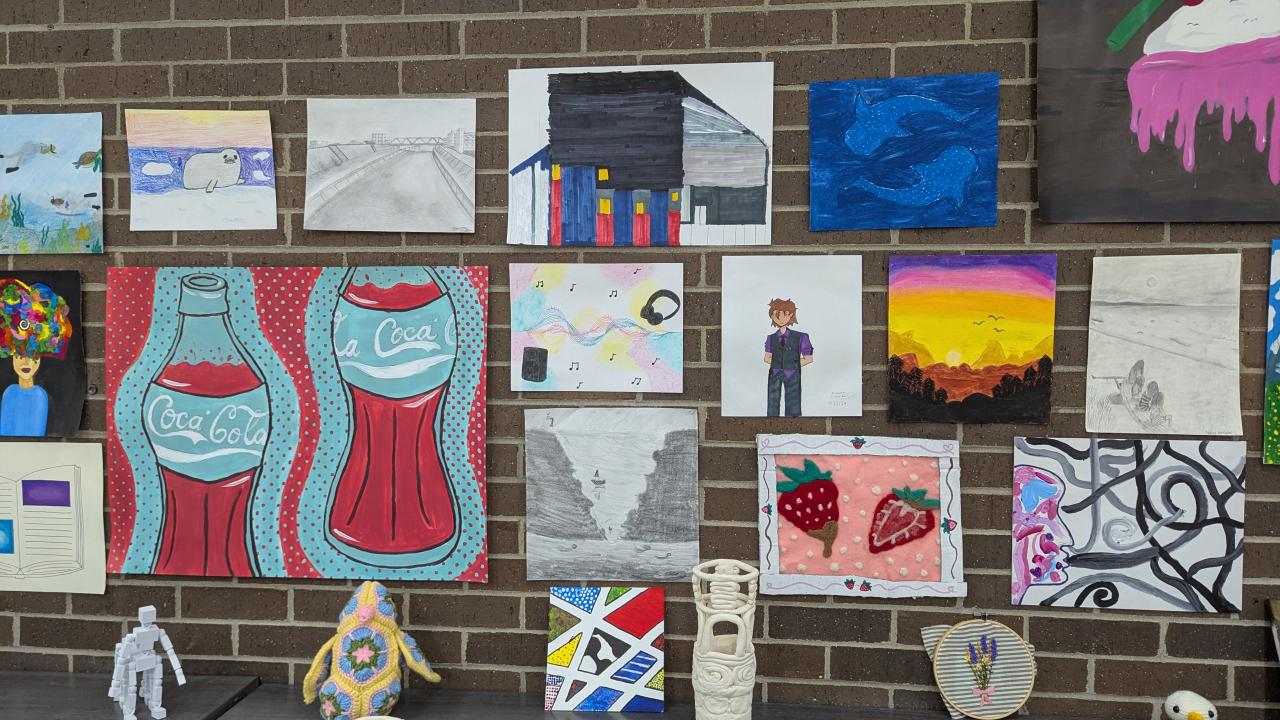
When Erica Gorzen’s students pick up a crochet hook, they choose their own path. Some make simple squares. Others create sweaters and stuffed toys. As the 2026-2027 Regional Teacher of the Year, this Portland High School art teacher shares how choice-based lessons help her students build confidence, independence, and a love of learning that lasts well beyond the classroom.

Build Trust, Boost Autonomy, & Design Smarter Check-Ins With Students
Strong student relationships don't happen by chance. They happen by design. Discover how structured check-ins can build trust, strengthen student autonomy, and help you create more student-centered learning experiences. Plus, access a free template or earn a SCECH while creating a check-in routine for your classroom.

Revisiting the 5:1 Ratio: Reflecting on a "Magic" Ratio Just Too Tidy to be True
A popular idea in education holds that teachers should aim for five positive interactions for every one corrective one. It spread quickly, cited widely, and seemed to just make sense. There was only one problem: the research behind it was never really about teaching at all.

Have You Considered AI in Your Classroom? A Khanmigo Pilot Story
In a two-phase pilot across Michigan schools, educators used Khanmigo, an AI-powered tutor and teaching assistant, to explore how AI might support teaching and learning. Their reflections surfaced both opportunities and challenges. The big takeaway? AI has potential, but only with intentional support.

From Curiosity to Career: Exploring Possibilities with VR
Explore how immersive VR simulations helped students step into real-world roles: from EMTs to chefs, all without leaving the classroom.