
Teaching for Today & Tomorrow: 2021 Takeaways

On Tuesday, February 23, 2021, hundreds of educators and administrators participated in the Teaching for Today & Tomorrow conference presented by Michigan Association of Secondary School Principals (MASSP) and Michigan Virtual. Mitch Albom shared a keynote address, and speakers hosted eight illuminating breakout sessions.
Watch all the sessions now
While it’s impossible to share everything we learned from the speakers and attendees, there are a few takeaways that we’d like to share.
1. Giving is living — that includes giving to yourself
Breakouts with @laurenkazee71 are speaking directly to my heart. So powerful! And so grateful to be able to hear this message! #TTT21
— Kayla Horton (@kaylamhorton) February 23, 2021
In Mitch Albom’s keynote address, he said, “giving is living.” As executive director of outreach at Michigan Virtual, Anne Craft, mentioned, “teachers give and give and give.”
Educators can’t pour from an empty cup, as speaker and founder of LivingSLOW, Lauren Kazee, reminded attendees. Making a concerted effort every single day to manage stress is essential to avoiding compassion fatigue and burnout. But how? Lauren suggests:
Set boundaries
Say, “No, thank you.”
Remember you have a choice
Create time limits (and stick to them!)
Write and repeat affirmations
Say, “Can I think about it?”
MASSP Executive Director, Wendy Zdeb, echoed this sentiment when she shared strategies for leading in the education space. She explained that while administrators must have “tough skin” and make difficult decisions regularly, they don’t need to do it alone.
Mark Thomas from Northview High School and Dr. Greg Dale from Duke University mentioned that reaching out to colleagues and cultivating a support system while leading during this unprecedented time is crucial for combatting feelings of isolation.
2. Don’t be afraid to try out tech tools
Emily Sicilia, Anne Perez, and Jeff Dungan from our professional learning team led two practical sessions, one of which was on bringing student-centered learning online. Some of our favorite tips for elementary and secondary teachers include:
Create classroom jobs using a digital interactive bulletin board
Provide student choice with a choose your own adventure choice board
Provide students with a single-point rubric
Use Google Forms to see how students are doing (see: elementary check-in example and secondary check-in example)
Jill Souza and Tara Bladow, two of our instructional designers, shared a bevy of free and low-cost tools to create content and assessments for online courses, but, they noted, it’s crucial to be thoughtful about the design organization.
3. Let data guide your teaching experience
Jeff Gerlach, our course development manager, led an invigorating session on creating an online learning experience that elicits engagement. As he said, “information alone is not instruction.”
Using surveys and one-on-one feedback can be fruitful, but so too can determining your students’ habits. Such habits can include the time of day learners are active, the content they view, and the time they spend on pages.
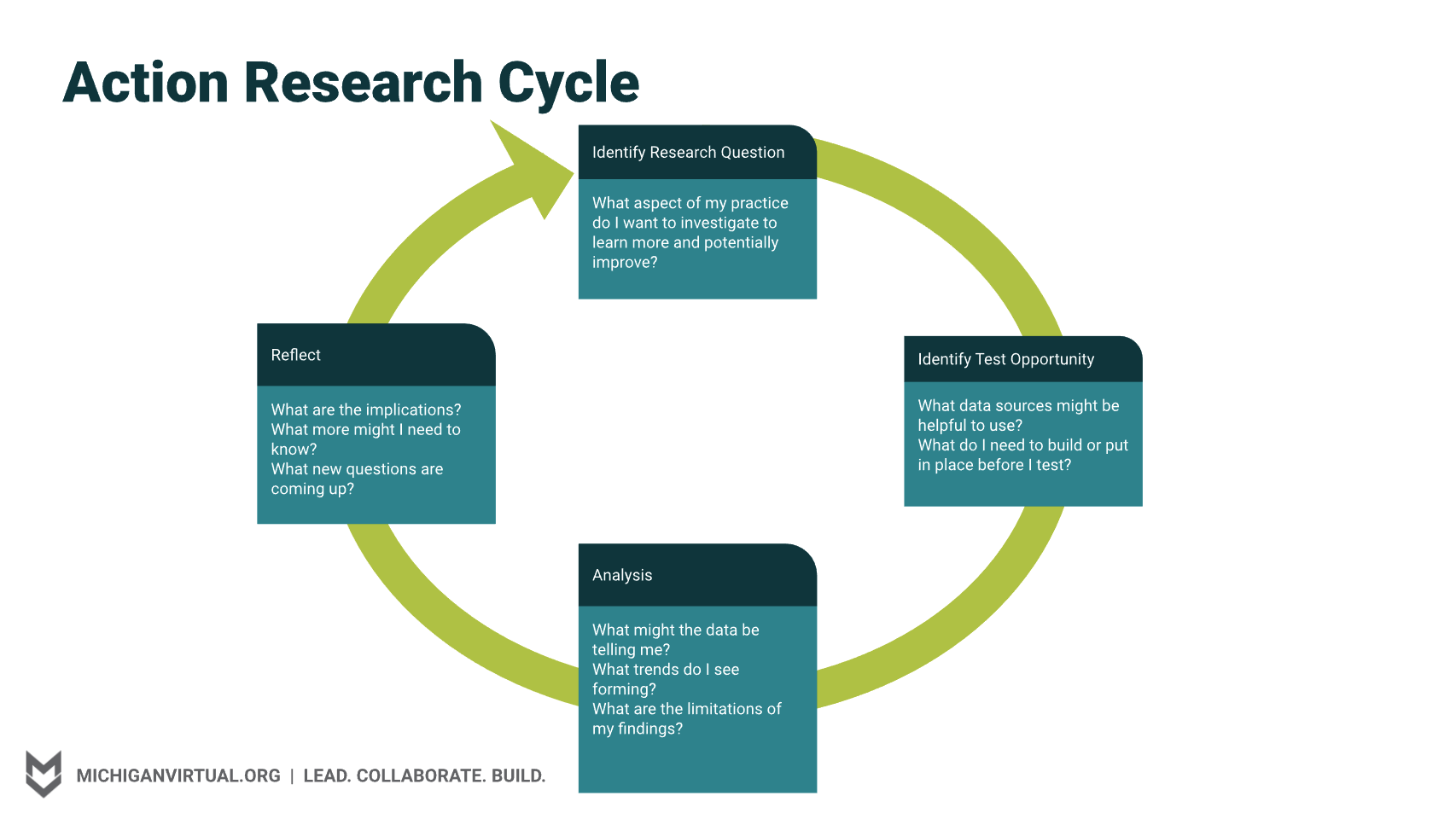
Be deliberate when creating and maintaining an online learning experience by asking the following questions:
4. “Students have a lot to say—we just need to listen”
Our future is in good hands with young ladies like this leading the way. Her poem kicked off today’s @MichiganVirtual Professional Development. Wow! These students have a lot to say—we just need to listen. #TTT21 @MitchAlbom pic.twitter.com/4FzhbAiTkq
— Eddie Collins (@EddieCollins34) February 23, 2021
Two of the most powerful moments of the conference belonged to students. Ife Martin, a spoken-word artist from Detroit, started the day with a poem about online learning during the pandemic. In her conversation with our President & CEO Jamey Fitzpatrick, Ife reminded us that students are trying the best they can.
At the end of the conference, MASSP presented a panel of student leaders throughout Michigan. Each shared the silver linings of the pandemic and the benefits of online learning. From increased connection with their communities to better school-life balance, these students reminded us why educators do what they do.
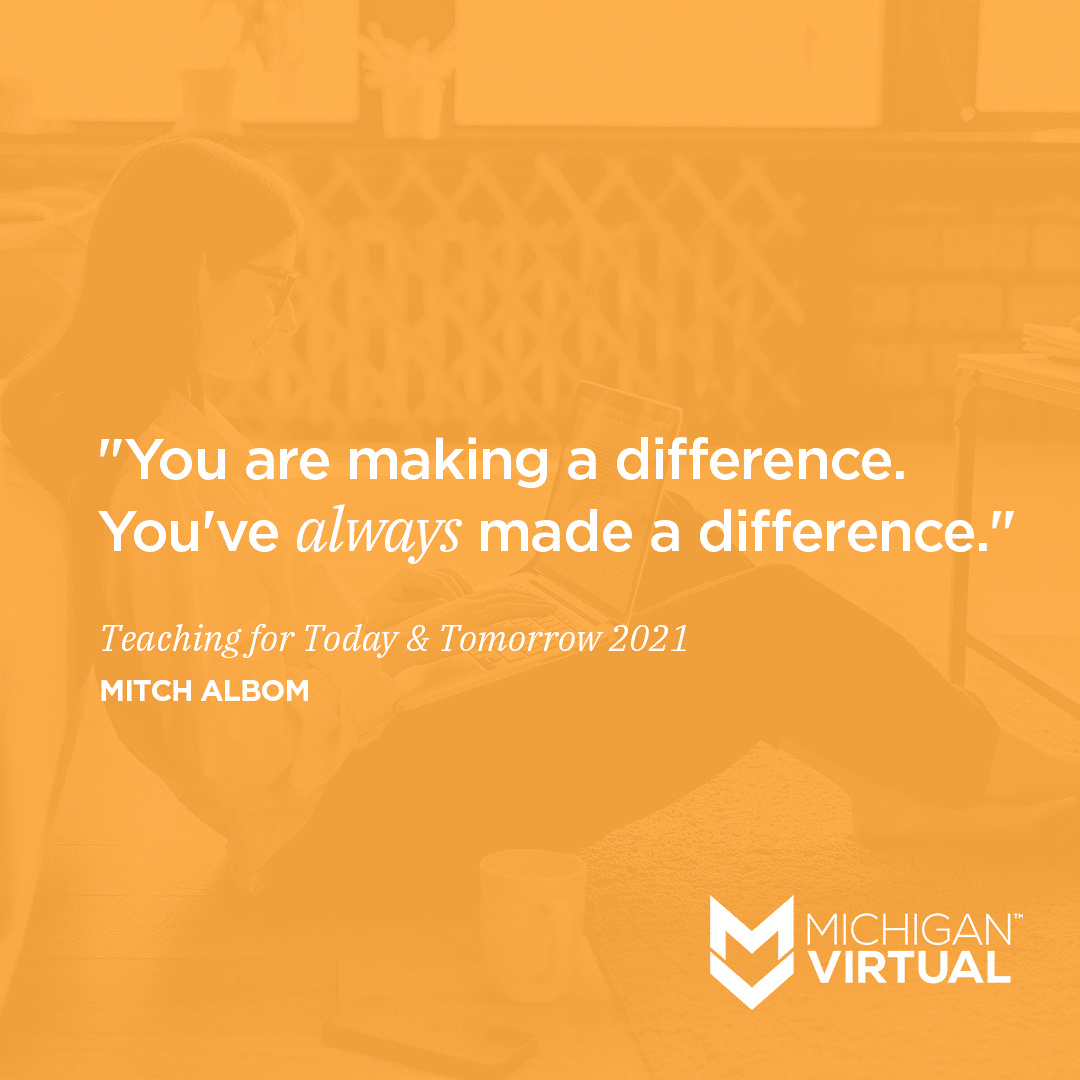
As Mitch Albom told the educators in the audience, “You are making a difference. You’ve always made a difference.”

Sarah Hill
Sarah believes words have the power to build community. She has been writing and editing professionally for more than a decade. Sarah earned her bachelor’s degree in English from the University of Missouri-Kansas City and her master’s degree in rhetoric and composition, as well as a scholarly publishing certificate from Arizona State University. Sarah lives in Austin, Texas and spends most of her time supplying her toddler with snacks.
Related Posts

Evaluating and Maximizing Professional Learning: An Interview with a Researcher
This blog digs into the key findings from two MVLRI research studies exploring educator engagement with professional learning (PL), their beliefs about implementing what they’ve learned, and insights into continuing to tailor PL to meet educators’ needs.
Creating a Culture of Continuous, Collaborative, and Personalized Professional Learning
Not only is the professional learning happening within Michigan's Grand Ledge Public Schools continuous and collaborative, it is also rooted in their strategic plan, reflective of their beliefs about student learning, and personalized to fit the unique needs of each staff member.

Street Data and Empathy: Revealing What Educators Truly Want from Professional Learning
What do educators actually WANT out of their professional learning experiences? This is a question my colleague Danielle, who contributed...

A Framework for Empathy: 3 steps leaders can follow to center educators’ Needs and Wants
Part 1 of this blog series digs into the results of a survey on what educators need and want from their professional learning experiences. Here in Part 2, we show you the framework we used to create and conduct the survey as well as provide you with ideas for implementing this framework in your own context. Special thanks to my colleague, Danielle Peck, who contributed significantly to this study and the writing of these blogs.

Effective Practices in Professional Learning Course Design: Course Content
Based on direct input from learners via end-of-course survey data, Michigan Virtual’s Instructional Product Development team gleaned the effective practices outlined in this blog in order to improve their course development and better meet the needs of the educators whom they serve.

Effective Practices in Professional Learning Course Design: Assessments, Format, Structure, and Appearance
Based on direct input from learners via end-of-course survey data, Michigan Virtual’s Instructional Product Development team gleaned the effective practices outlined in this blog in order to improve their course development and better meet the needs of the educators whom they serve.