
Introduction
As described in the introductory report of this series, online learning is often portrayed as delivering education at “any time, any place, and any pace.” In this report, we’ll explore what is meant by learning “any time,” how students leverage this aspect of online learning, and its association with course performance outcomes.
What is Meant by Learning “Any Time”?
Students may choose online learning when a traditional face-to-face classroom schedule doesn’t align with their needs. Students may need flexibility to accommodate busy schedules and non-academic obligations. For instance, students seriously pursuing athletic or artistic endeavors may want to structure their learning around practice and travel obligations. (Foundation for Blended Learning, 2017).
In self-paced online courses, students may complete work and submit assignments at any time during the course, allowing them to honor both academic and non-academic commitments (Connections Academy, 2020). Learning “any time” thus refers to the component of online learning that allows students to access their courses and submit assignments when it fits their schedules, including the flexibility to access lectures and resources, and submit assignments outside traditional face-to-face school hours.
In this report, we define learning “any time” as a static moment measured via a learning management system (LMS) timestamp, such as when a student enrolls in the course, accesses course materials, or submits an assignment. For this research series, we use this working definition of learning “any time” to give readers a clear and practical way to think about how this type of flexibility may show up in their own students, courses, and programs. This definition also helps us describe when students enroll in courses, access course materials, and submit assignments. In doing so, it supports the broader goal of this series: to better understand how students use the flexibility of online learning.
This definition also allows us to consider how learning “any time” may relate to course outcomes. Viewing time as a distinct area of focus can help identify patterns useful to course designers, instructors, and mentors as they support students in online courses.
Although there are benefits to looking at learning “any time” on its own, we recognize that time, place, and pace are closely connected. For example, one student may submit several assignments from home in one evening so they can make time for extra practice before a major sporting competition. Another student may study for an exam early in the morning before work and then take the exam later that night after returning home.
The final report in this series will bring time, place, and pace together to provide a more complete picture of how students engage with the flexibility of online learning. Before doing that, this report focuses specifically on time to better understand when students are engaging with the learning management system. These insights may help inform communication, outreach, and intervention efforts designed to better support students.
How Do Students Leverage Learning “Any Time”?
Despite flexibility being a significant draw for students’ migration to online learning, little is known about what this looks like in practice (Beck et al., 2014). In other words, what does learning “any time” actually look like for students enrolled in online coursework? Before students even begin formal coursework, we can explore the timing of engagement in online learning by examining enrollment practices. Using a large sample of students taking supplemental high school-level online courses, research suggests that students vary in when they begin and engage with their online courses, and these timing patterns may be related to student context and course outcomes. Zweig and colleagues found that 47.4% of students enrolled before the course start date, 12.1% enrolled on the course start date, and 40.5% enrolled after the course had already started.
Other research similarly suggests that students vary in when they engage with online coursework. For example, working students tend to make greater use of the flexibility of online learning than students who are not working full-time, showing greater variation in both when and where they complete coursework (Du et al., 2019).
Finally, when students engage with coursework is closely connected to how they pace themselves through a course. Research suggests that consistent course engagement is associated with student success, while students at risk of failing often show low engagement, infrequent interaction with course content, or limited persistence (Zhang et al., 2022). For this reason, timing should be understood as one part of a larger picture of how students use the flexibility of online learning. The role of pacing and its relationship to course outcomes will be explored in greater detail in the subsequent “any pace” report.
The Current Study
The reviewed research provides some insight into students’ course access and engagement behaviors. However, much of this work focuses on postsecondary students, and less is known about how K-12 students use the flexibility of online courses to learn “any time.”
To address this gap, this study examined how students used time in their online courses and how different timing patterns related to final course scores. Specifically, the study focused on when students first accessed their courses, how long they spent enrolled, when they submitted assignments, and whether these patterns were related to course performance. Understanding how students use time in online courses may reveal opportunities to provide more structured and timely support, especially given that students can benefit from dedicated time to receive synchronous or structured support (Borup & Stimson, 2017).
The following research questions guided this study:
How do students use time as they begin and move through their online courses?
When do students first access their courses and submit assignments?
How are students’ timing patterns related to final course scores?
Methods
Data for this report were collected from the Michigan Virtual Learning Management System. The dataset included enrollment, course access, and assignment submission information for students in select high-enrollment courses across five subject areas: English language and literature, life and physical sciences, mathematics, social sciences and history, and world languages. All data were from Spring 2024.
Data Cleaning and Sample Description
Students who dropped their course during the grace period or did not complete their course were removed from the dataset. Because this report focuses on student-level patterns, students enrolled in more than one course were included only once. After these exclusions, the final sample included 1,197 students.
Time stamp variables
Assignment submission timestamps were used to identify whether students submitted work during or outside of traditional school hours. Submissions were coded as occurring during school hours if they were submitted Monday through Friday between 7:00 a.m. and 3:00 p.m. Eastern Time. Submissions outside of those days and times were coded as occurring outside of school hours.
This approach provides a useful starting point for understanding what learning “any time” looks like in practice. However, it does not account for holidays, school breaks, or other weekdays when students may not have been in school. It also does not indicate where students were physically located when they submitted their work. Student location will be explored in the subsequent “any place” report.
Course Performance
To help better contextualize how time was related to student performance, students were sorted into groups based on their final course scores. Students were categorized as passing if they received a final course score greater than 60%, and as failing if they earned less than 60%. Students were categorized as showing content mastery if they received a final course score greater than 80%, while those earning less than that were categorized as not demonstrating mastery.
Patterns in Students’ Use of Time
How Students Begin Their Courses
Students’ first course access provides one look into how they begin engaging with their online courses. Previous research has suggested that the timing of students’ first course access is related to course performance, with students who access their course within the first week earning higher final course scores than students who do not exhibit this pattern of access (Zweig, 2023).
In this sample, half of the students first accessed their course within about nine days, suggesting that first course access typically occurred relatively quickly. However, some students experienced much longer delays between enrollment and first course access, largely because they enrolled in a course that was a sequential progression of another course (e.g., Algebra II). These longer delays raised the overall average time from enrollment to first course access to 36 days.
The timing of students’ first access also showed that many students began engaging with their courses outside traditional school hours. The majority of students, about 68%, accessed their course for the first time outside traditional school hours, meaning before 7:00 a.m. or after 3:00 p.m. Friday was the most common day for students to access their course for the first time, followed by Monday (Refer to Figure 1). Looking at day and time together, only about 32% of students accessed their course for the first time during weekday school hours.
Figure 1. First Course Access During and Outside Weekday School Hours
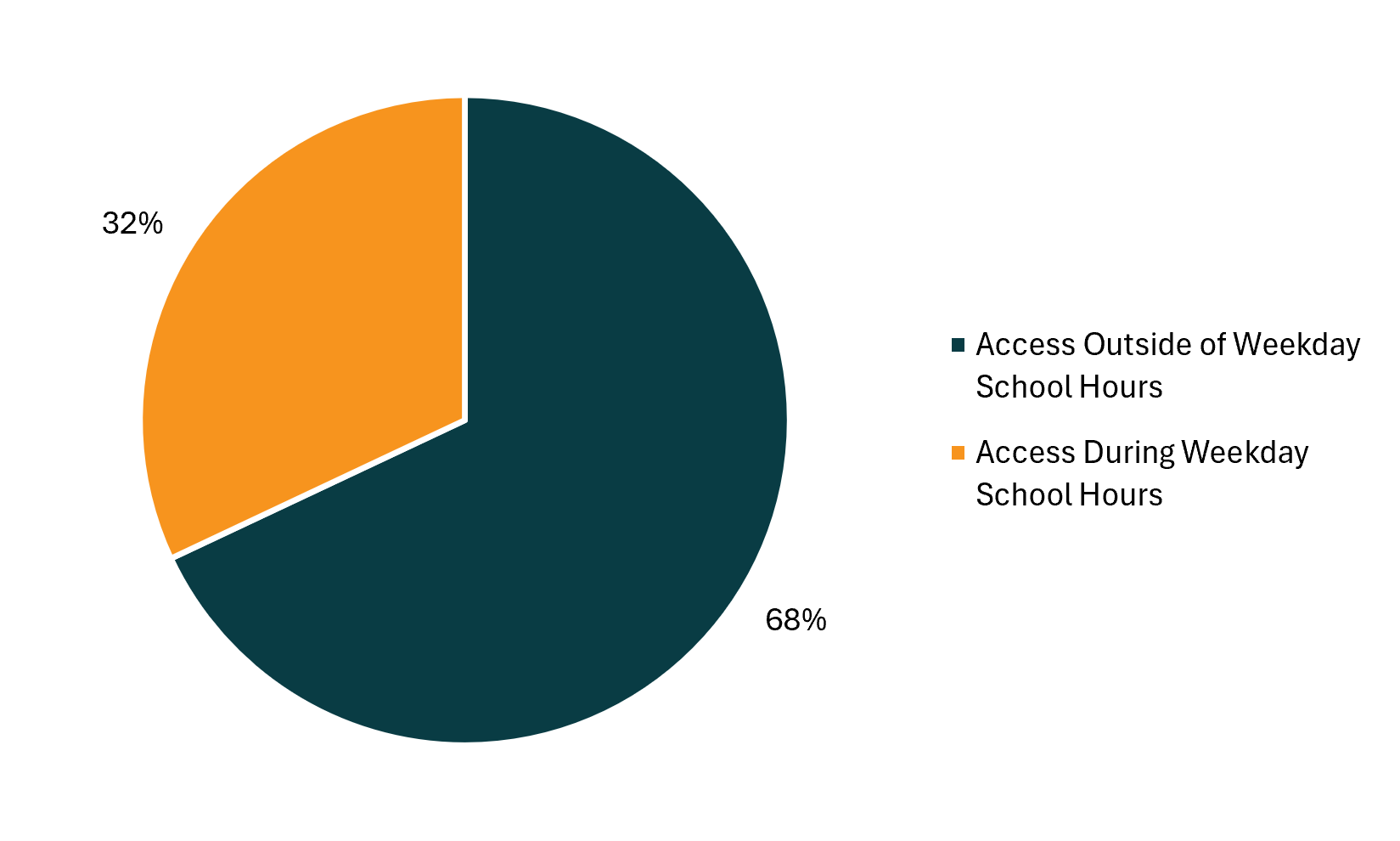
These findings suggest that students’ first interaction with their course often happens outside the traditional school day. This has important implications for how teachers and mentors welcome students into online courses. Because some students may first enter the course when a teacher or mentor is not immediately available, early course communications should help students understand how to navigate the learning management system, what to expect in the course, how to ask for help, and when teachers and mentors are available.
Why Timing Patterns Need Context
Although delays between enrollment and first course access may seem concerning at first, these patterns need to be interpreted with caution. In this sample, longer delays between enrollment and first course access were not necessarily associated with lower performance. In fact, students who passed their courses had significantly longer delays between enrollment and first access than students who failed; again, the delay was largely due to early planning and enrollment of sequential courses. Similarly, students who demonstrated content mastery had significantly longer delays between enrollment and first access than students who did not demonstrate mastery.
This finding suggests that delayed access is not always a red flag signaling procrastination, disengagement, or difficulty with course pacing. In some cases, delayed access may reflect planned enrollment, such as when students enroll in a course that begins later or follows another course in a sequence. Understanding students’ intentions and the reasons for their timing of enrollment may provide important context for teachers, mentors, and administrators as they monitor student progress.
For this reason, timing data may be most useful when paired with other information about the student, the course, and the reason for enrollment. Administrators can support teachers and mentors by communicating relevant enrollment context when appropriate, especially when a delay between enrollment and first course access is expected rather than concerning.
Time Enrolled Versus Time Engaged
The amount of time students spent enrolled in their courses did not show a consistent relationship with course performance. On average, students spent approximately 136 days, or about 19.6 weeks, in their courses from first access to exit. Given that Michigan Virtual courses typically range from approximately 16 to 20 weeks, this suggests that students generally spent an expected amount of time in their courses.
Students who passed their courses did not significantly differ from students who failed in the length of time they were enrolled. Similarly, students who demonstrated content mastery did not differ significantly from those who did not. To better understand whether this relationship varied by performance level, we also examined students at the 25th, 50th, and 75th percentiles of final course scores. Across these points, the length of time enrolled in the course was positively associated with final course score, but this relationship was statistically significant only for students in the 75th percentile, and the effect was practically small.
In other words, time in the course by itself did not appear to be the most meaningful indicator of student performance. A more useful indicator may be how students used that time, particularly in relation to assignment submissions. The time between students’ first and last assignment submissions was positively associated with final course score, though this association was statistically significant only for students at the 25th and 75th percentiles. This pattern likely reflects appropriate course progression aligned with course pacing expectations, rather than students completing large amounts of work in a compressed period of time.
These findings underscore the importance of monitoring students’ assignment submission behaviors throughout the course. Longer intervals between first and last assignment submissions may suggest that students are spreading their work across the course, rather than cramming assignments near the end. Research has established a negative relationship between cramming and course performance and a positive relationship between spacing and course performance (Carvalho et al., 2020; Kwon & DeBruler, 2019). Because these concepts are closely tied to pacing, they will be explored in more detail in the subsequent “any pace” report.
Flexibility Still Relies on School-Day Support
One of the clearest patterns in the data was the contrast between when students first accessed their courses and when they submitted assignments. While most students accessed their course for the first time outside traditional school hours, most assignments were submitted during traditional school hours (refer to Figure 2).
Figure 2. Assignment Submissions During and Outside Weekday School Hours 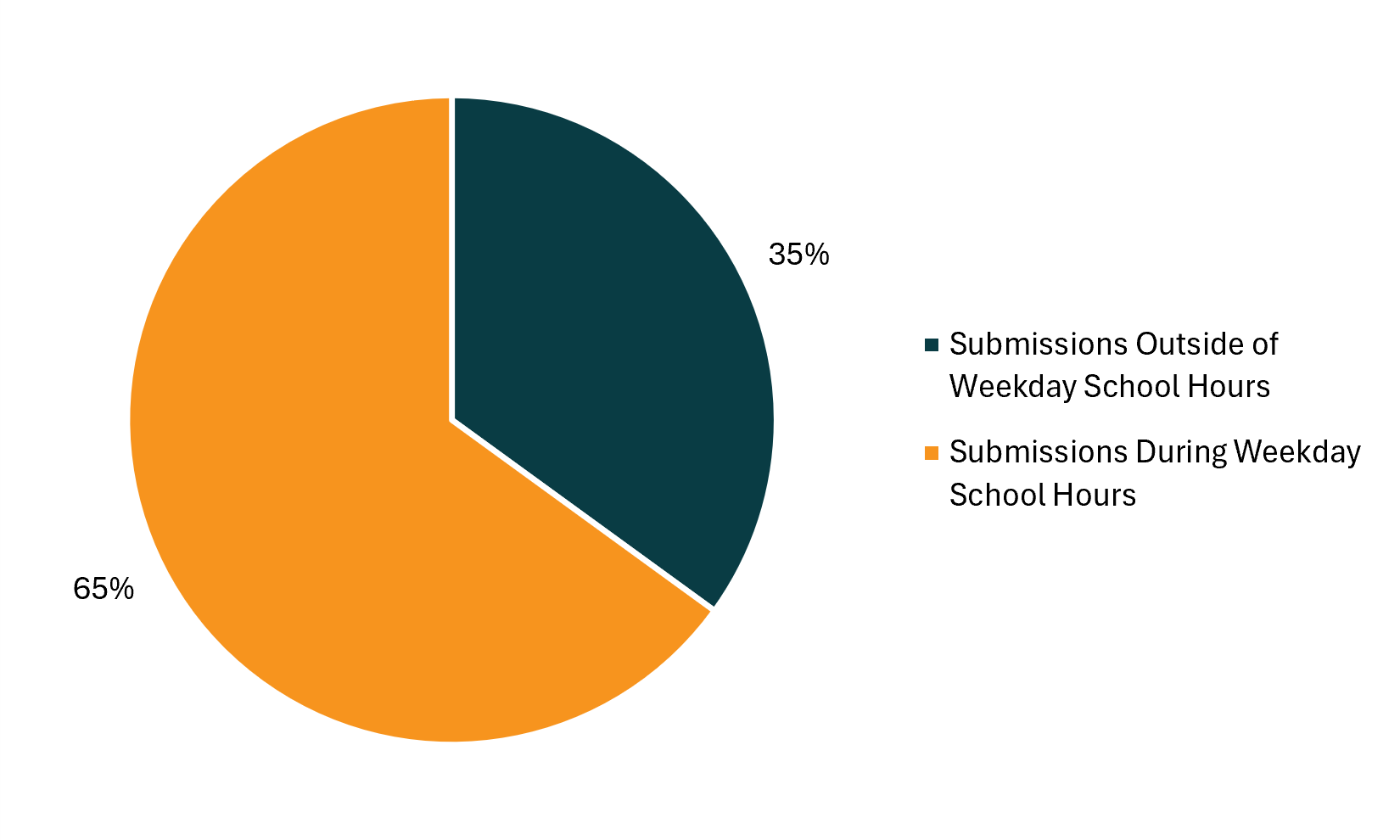
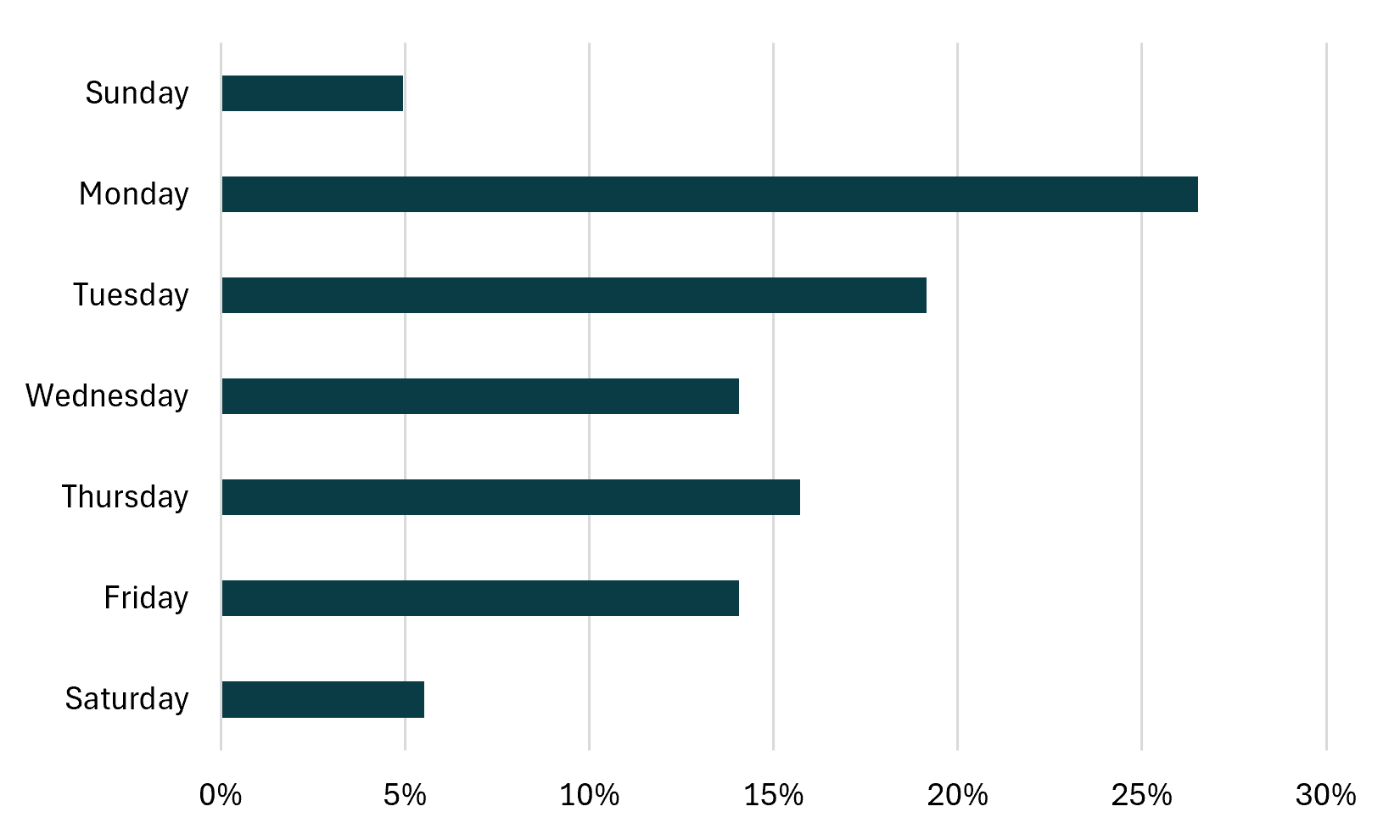
On average, about 70% of assignments were submitted during school hours, defined as 7:00 a.m. to 3:00 p.m. Assignments were most commonly submitted on Mondays (see Figure 3). Looking at day and time together, approximately 65% of assignments were submitted during weekday school hours.
Figure 3. Assignment Submissions by Days of the Week
Looking more closely at assignment submissions by time of day, a similar pattern emerged. Assignment submissions were concentrated during traditional school hours, particularly between 8:00 a.m. and 2:00 p.m (Refer to Figure 4). Submissions declined after the school day, though evening submissions were still present, with a noticeable increase around 8:00 p.m. This pattern suggests that while students do submit work outside of school hours, a substantial portion of assignment activity still occurs during times when school-based support may be more available.
Figure 4. Assignment Submissions by Time of Day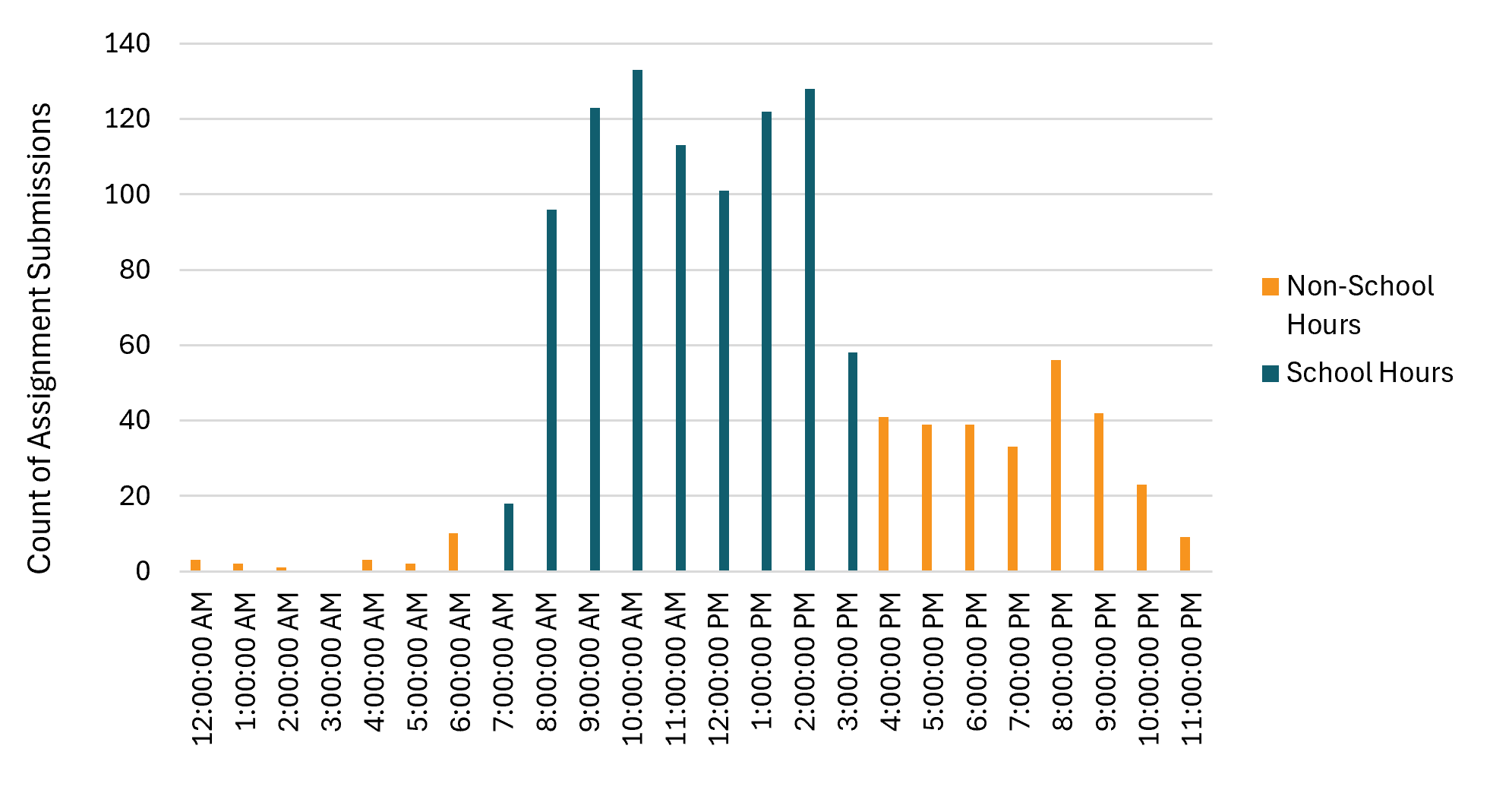
This finding is noteworthy because flexibility is often a major draw of online learning, yet most assignment submissions still occurred during the school day. This may suggest that students often rely on school-based structures, dedicated time, or available support when completing and submitting coursework. It may also reflect the role that mentors, teachers, or other school personnel play in helping students stay engaged and make progress.
There was no significant difference between students who passed and students who failed in the percentage of assignments submitted during school hours. However, students who did not demonstrate content mastery submitted a significantly higher percentage of assignments during weekday school hours than students who did demonstrate mastery. The reason for this difference is unclear, but several interpretations are possible. Students who are struggling may be more likely to complete assignments during school because they need access to a mentor, teacher, or other adult who can help them understand course content, assignment directions, feedback, or expectations. It is also possible that students who are falling behind are prompted by mentors or teachers to work on assignments during study hall, lab time, or other dedicated school-day periods.
Research on student support in online learning reinforces the importance of this kind of adult guidance. Mentors play a significant role in monitoring, motivating, and supporting students in online courses, including through strategies such as requiring students to attend a lab session or allowing students who are doing well to work from a preferred location (Borup & Stimson, 2017; Borup et al., 2018). Prior research also suggests that mentors can support student learning and may help improve pass rates (Lynch, 2019; Roblyer et al., 2008).
Using Timing Data to Support Students
Taken together, these findings suggest that learning “any time” does not mean students are using time in one uniform way. Students may first access their courses outside traditional school hours, while much of their assignment submission activity still occurs during the school day. Delays between enrollment and first course access may not always signal concern, particularly when they reflect planned course-taking or sequential enrollment. At the same time, assignment submission patterns may provide useful information about whether students are pacing themselves appropriately and receiving the support they need.
These patterns point to several considerations for supporting students. First, teachers and mentors should provide clear welcome and orientation information before or at the beginning of the course, since many students may first access the course outside traditional school hours. This communication should include practical information on course expectations, start and end dates, office hours, communication norms, and where students can seek help. It should also help students begin to see their instructor as a real person, supporting early relationship-building in the online course environment.
Second, teachers and mentors should monitor assignment engagement throughout the course. This includes checking student progress against pacing guides, looking for notable delays or signs of cramming, and helping students stay on track to complete assignments by the course exit date. Timely feedback is also important for helping students build content mastery, understand assignment and course expectations, and develop relationships with their instructors (Cuccolo & Green, 2024).
Finally, regardless of whether students complete assignments during or outside of school hours, they need access to support. Students may need help navigating the learning management system, understanding assignment directions, interpreting instructor feedback, communicating with instructors, or developing the self-regulated learning skills needed to manage their time in an online course. Timing data can help teachers, mentors, and administrators better understand when students are engaging and where support may be needed most.
Conclusion
These findings suggest that students use the flexibility of online learning in different ways across the course experience. Many students first accessed their courses outside traditional school hours, suggesting that the beginning of an online course may not always happen during the school day or when immediate support is available. At the same time, assignment submissions were concentrated during weekday school hours, especially during the middle of the school day. This suggests that school-based time, structures, and support may still play an important role in students’ online learning.
The findings also show that timing patterns should be interpreted with context. Delays between enrollment and first course access were not necessarily signs that students were disengaged or falling behind. In some cases, these delays may have reflected planned course-taking or sequential enrollment. In contrast, assignment submission patterns may provide more useful information about how students are progressing through their courses and whether they may need additional support with pacing, feedback, or course expectations.
Overall, learning “any time” does not mean students are learning at random times or without structure. Rather, students appear to use time flexibly while still relying on course timelines, school-day supports, mentors, instructors, and other adults to help them stay on track. Understanding these patterns can help teachers, mentors, and administrators provide timely communication, monitor student progress, and better support students as they navigate the flexibility of online learning.
AI Disclosure
Grammarly was used to proofread this publication for grammatical errors and ClaudeAI was used to debug specific lines of code and to format references in line with APA 7th edition.
References
Borup, J., Chambers, C. B., & Stimson, R. (2018, September 20). Helping online students be successful: Student perceptions of online teacher and on-site mentor facilitation support. Michigan Virtual Learning Research Institute. https://michiganvirtual.org/research/publications/helping-online-students-be-successful-student-perceptions-of-online-teacher-and-on-site-mentor-facilitation-support
Borup, J., & Stimson, R. (2017, January 28). Helping online students be successful: Mentor responsibilities. Michigan Virtual Learning Research Institute. https://michiganvirtual.org/research/publications/helping-online-students-be-successful-mentor-responsibilities
Carvalho, P. F., Sana, F., & Yan, V. X. (2020). Self-regulated spacing in a massive open online course is related to better learning. npj Science of Learning, 5(1), 2.
Connections Academy. (2020, August 18). Differences between real time and anytime learning. https://www.connectionsacademy.com/support/resources/article/differences-between-real-time-and-anytime-learning/
Cuccolo, K., & Green, C. (2025). Out of order, still out of reach: Navigating assignment sequences for MV world language courses. Michigan Virtual. https://michiganvirtual.org/research/publications/navigating-assignment-sequences-for-mv-world-language-courses/
Du, X., Yang, J., Shelton, B., & Hung, J. L. (2019). Is learning anytime, anywhere a good strategy for success? Identifying successful spatial-temporal patterns of on-the-job and full-time students. Information Discovery and Delivery, 47(4), 173–181. https://doi.org/10.1108/IDD-09-2019-0060
The Foundation for Blended and Online Learning. (2017). Why do students choose blended and online schools? The "end of average" requires personalized learning environments. The Foundation for Blended and Online Learning and Evergreen Education Group. https://eric.ed.gov/?id=ED589983
Kwon, J. B., & DeBruler, K. (2019, September 26). Pacing guide for success in online mathematics courses. Michigan Virtual. https://michiganvirtual.org/blog/pacing-guide-for-success-in-online-mathematics-courses/
Lynch, D. (2019, October 15). Strategies for mentoring online students. Michigan Virtual. https://michiganvirtual.org/blog/strategies-for-mentoring-online-students/
Roblyer, M. D., Davis, L., Mills, S. C., Marshall, J., & Pape, L. (2008). Toward practical procedures for predicting and promoting success in virtual school students. American Journal of Distance Education, 22(2), 90–109. https://doi.org/10.1080/08923640802039040
Zhang, M., Du, X., Rice, K., Hung, J., & Li, H. (2022). Revealing at-risk learning patterns and corresponding self-regulated strategies via LSTM encoder and time-series clustering. Information Discovery and Delivery, 50(2), 206–216. https://doi.org/10.1108/IDD-12-2020-0160
Zweig, J. (2023). The first week in an online course: Differences across schools. Michigan Virtual. https://michiganvirtual.org/research/publications/first-weeks-in-an-online-course/