
Introduction
Being able to learn ‘any time, any place, and at any pace’ is often seen as a strength of online learning (Connections Academy, 2020; ION Professional eLearning Program, n.d.). Despite flexibility and autonomy being central features that attract students to online learning, little is known about how students actually use these features. The Introductory Report in this series explored what is known about learning ‘any time, any place, and at any pace,’ highlighting critical gaps in K-12 research, while the second report (Any Time, Any Place, Any Pace: How Students Use Time in Online Courses) described how students learned ‘any time’ and its relationship to final course scores. This report will focus on describing students’ use of learning ‘any place’ and exploring its relationship to final course score.
What is meant by learning ‘any place’?
In traditional modes of instruction, learning takes place synchronously with teachers and students in the same location (Connections Academy, 2020). Online learning enables teachers and students to collaborate from different locations, provided they have internet access (Connections Academy, 2020). This not only means that teachers and students don’t have to be physically present in the same location for learning to occur, but the location from which students learn can vary depending on their needs. For example, a student may learn from multiple locations while traveling for a sporting event or performance (The Foundation for Blended and Online Learning, 2017).
Why is considering ‘place’ important?
In an online course, “place” is multifaceted. The content, assignments, and student-teacher interactions all take place in the online environment – likely through a learning management system (LMS), video conferencing software, and/or email. The lack of a fixed location for student-teacher interaction enables students to complete their coursework from anywhere with an internet connection. Indeed, students may complete their coursework from a variety of physical locations, such as home, school, hotels, and libraries, throughout the course, depending on both academic and personal circumstances. While students may be able to exert some control over where they complete their coursework from, they still exist within the context of their home districts and communities. Understanding the communities in which students are situated can help facilitate more tailored personalized supports.
Borup’s (2014) Adolescent Community of Engagement (ACE) framework situates students’ affective, behavioral, and cognitive engagement within the context of teacher, parent, and peer engagement. Student engagement, according to this framework, is a social process that can be supported by the knowledge, skills, and encouragement of individuals within both a student’s course (online) and personal community (i.e., across modalities; Spring et al., 2024). Research suggests that both course and personal communities impact students’ cognitive and affective engagement in their online courses (Spring et al., 2024). In other words, the communities that students exist in outside of their online classroom influence the resources and supports to which they have access. For example, Michigan state law mandates that students taking an online course be assigned an in-person mentor, and access to mentoring has been associated with increased online pass rates (Borup & Stimson, 2019). Parental or guardian engagement and support also matter for students taking online courses, with increased engagement having a positive association with student performance (e.g., Ricker et al., 2021).
Despite research suggesting that the physical and social context of students’ learning environments may facilitate or hinder learning and impact engagement, time on task, collaboration with peers, and academic outcomes (Kariippanon et al., 2021; Oliveras-Ortiz et al., 2021; Scott-Webber et al., 2017), little is known about where secondary-level students complete their online coursework and how they leverage the flexibility of learning “any place” (Ng, 2021).
Many K-12 providers may assume that “home” is the default location (e.g., California Virtual Academies, n.d), despite a significant gap in research on where students complete their coursework. Work done with college students suggests that learning locations may vary with certain student characteristics. For example, primary learning locations for working students include their homes or workplaces. However, for full-time students, the most common locations are the classroom/library and dorm rooms (Due et al., 2019). While research with college students may not generalize to K-12 settings, this research provides context for how understanding place-based variations may benefit support and outreach efforts. Similarly, Seddon (2019) examined secondary students' performance on a science exam across three time points, with some students taking the exam in the same location each time and others being tested in different locations. The students whose locations did not change performed significantly better than those who did. This suggests that varying locations negatively affected learning; however, the study did not account for potential baseline differences, and the time between exams was not standardized.
The current study
The reviewed research situates ‘place’ as an important feature of students’ learning experience. Despite its importance and online learning's ability to facilitate learning from ‘any place,’ the extent to which K-12 students use this flexibility isn’t well understood. Understanding how students leverage place in online learning can help school administrators, teachers, and mentors craft more tailored supports.
To address this gap, this study used a combination of school-reported demographic information and learning management system (LMS) assignment data to examine students’ enrollment location and assignment submission behaviors.
The following research questions guided this study:
Where are students enrolling in their online courses from?
How is student location related to assignment submissions?
How are students’ location patterns related to final course scores?
Methods
Spring 2024 enrollment, course access, and assignment submission information from students in highly enrolled core subject-area courses facilitated the analyses for the current study. Only students who completed their courses were included in the analyses.
Place Variables
To understand how students used the flexibility of learning from "any place," place was conceptualized based on: characteristics of the student's school context, and characteristics of where individual assignments were completed.
School type, locale (urban, suburban, town, rural), economic status (percentage of all learners who qualify for free or reduced-price lunch), and diversity (the percentage of all learners who identify as non-White) were used to get a picture of the kind of community and school environment each student came from.
The date and time an assignment was submitted were used as a proxy for “place” because location data was not being captured by the current LMS. If an assignment was submitted during weekday school hours, it was categorized as being submitted “at school”; otherwise, assignments were categorized as being submitted “not at school”. Despite not being a perfect approximation, this facilitated an important first look at how K-12 students may be utilizing the flexibility of “place” in their online courses.
The methodology for this study is described in further detail in the report ‘Any Time, Any Place, Any Pace: How Students Use Time in Online Courses’.
Results
What do students' learning contexts look like?
Although online courses can be accessed from many locations, students remain connected to local school communities that shape the conditions in which their online learning takes place. Michigan Virtual is provided with information about the locale, entity, economic, and diversity makeup of the buildings that enroll students in online courses. Using this information, we can get a snapshot of the school-based places and local contexts from which students participate in online learning. Although these data do not identify the specific physical locations where students complete their coursework, they help describe the broader environments in which that learning is situated.
Large suburban schools accounted for the largest percentage of students in the current study (29.66%), followed by fringe rural schools (18.13%). Midsize city schools accounted for the smallest percentage (0.25%). These locale categories provide one way of understanding the geographic and community settings surrounding students as they engage in their online courses. They also offer insight into the types of local school settings that may shape students’ access to space, technology, personnel, and other supports for online learning. Compared to statewide trends, this sample had a slightly different locale breakdown than might be expected, as rural schools tend to have a higher percentage of enrollments than suburban schools (Freidhoff et al., 2026).
Place is also shaped by the resources and economic conditions of the school communities in which students are situated. Students from school buildings where between 25 and 50% of students received free or reduced price lunch (FRPL) made up 40.43% of the sample, followed closely by students from buildings where less than 25% of students received FRPL (36.51%). As with locale, the distribution of students across these school contexts differed somewhat from statewide patterns. Our sample had a greater percentage of students from buildings where between 25 and 50% of students received FRPL than students from buildings with between 50 and 75% received FRPL (Freidhoff et al., 2026). These differences provide additional context for understanding the community conditions surrounding students’ participation in online courses.
The social and demographic makeup of students’ schools offers another perspective on the local environments surrounding their online learning. Students from buildings with a non-white school population of less than 25% made up 65.41% of students, while those from buildings with a non-white school population of more than 75% accounted for only 1.34%. In terms of entity type, LEA schools accounted for the majority of students (91.48%). Together, these findings describe the kinds of school communities from which students entered their online courses and generally reflect the patterns observed in Michigan Virtual’s overall enrollment data (Michigan Virtual, 2025). Viewed through the lens of place, these characteristics help establish the school and community contexts within which students accessed and experienced online learning. Refer to Appendix A for more information.
Where are students located?
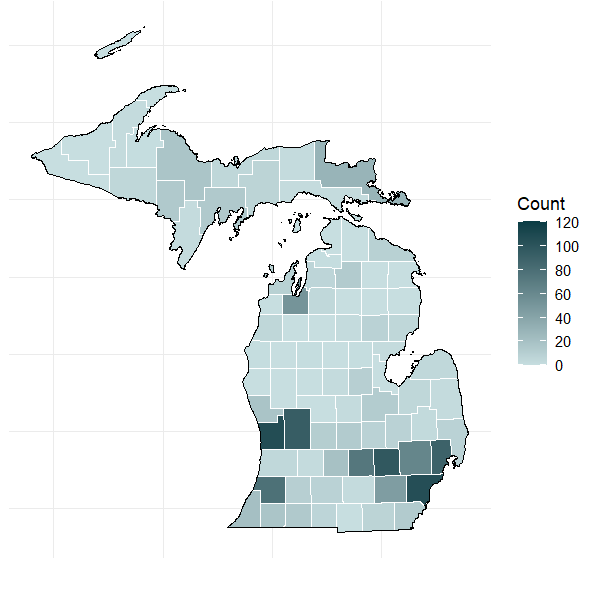
Figure 1 provides a visual overview of the concentration of students enrolled in Michigan Virtual courses by the Michigan county in which their enrolling school building is located.
While this research sample only contained a small subset of all Michigan Virtual students, the pattern that emerged reflects trends observed in Michigan Virtual’s Annual Report, with the largest concentration of students coming from counties in the southeastern part of the state. In the current study, the county that enrolled the most students was Ottawa (n = 106). Wayne (n = 105) county in the southeast portion of the lower peninsula was close behind. These patterns provide additional context for understanding the geographic distribution of students participating in online courses, which can be helpful for equitable staffing practices across regions and for helping mentors and instructors understand the communities their students come from. This understanding helps ground relationship-building and personalized outreach, which can be important for student success (Cuccolo & DeBruler, 2023). However, the county of enrollment does not indicate the specific locations from which students completed their coursework, which may be important for the development and implementation of more tailored supports.
Figure 1. Michigan Virtual Student Counts broken out by County
 Where do students tend to complete their coursework?
In online courses, coursework is typically scaffolded such that content and assignments build upon each other in increasing complexity. In addition to navigating increasingly difficult course concepts, students must also adapt to the unique skills required to successfully navigate online coursework. In this regard, the resources and supports students have access to can be pivotal in their success. The location where students work may reveal which resources and supports they have access to, desire, or need. Although submission times do not confirm students’ physical locations, work completed during weekday school hours may indicate greater use of school-based settings and supports.
For context, on average, quizzes make up about 48.6% of students' coursework, while discussions and dropbox assignments make up approximately 10.60% and 39.90%, respectively. On average, approximately 56% of quizzes and dropbox assignments were submitted during weekday school hours. A notably smaller percentage of discussions were submitted during weekday school hours, 47.0%, on average. These patterns suggest that students’ use of school-connected time, and potentially school-based places, may vary by assignment type.
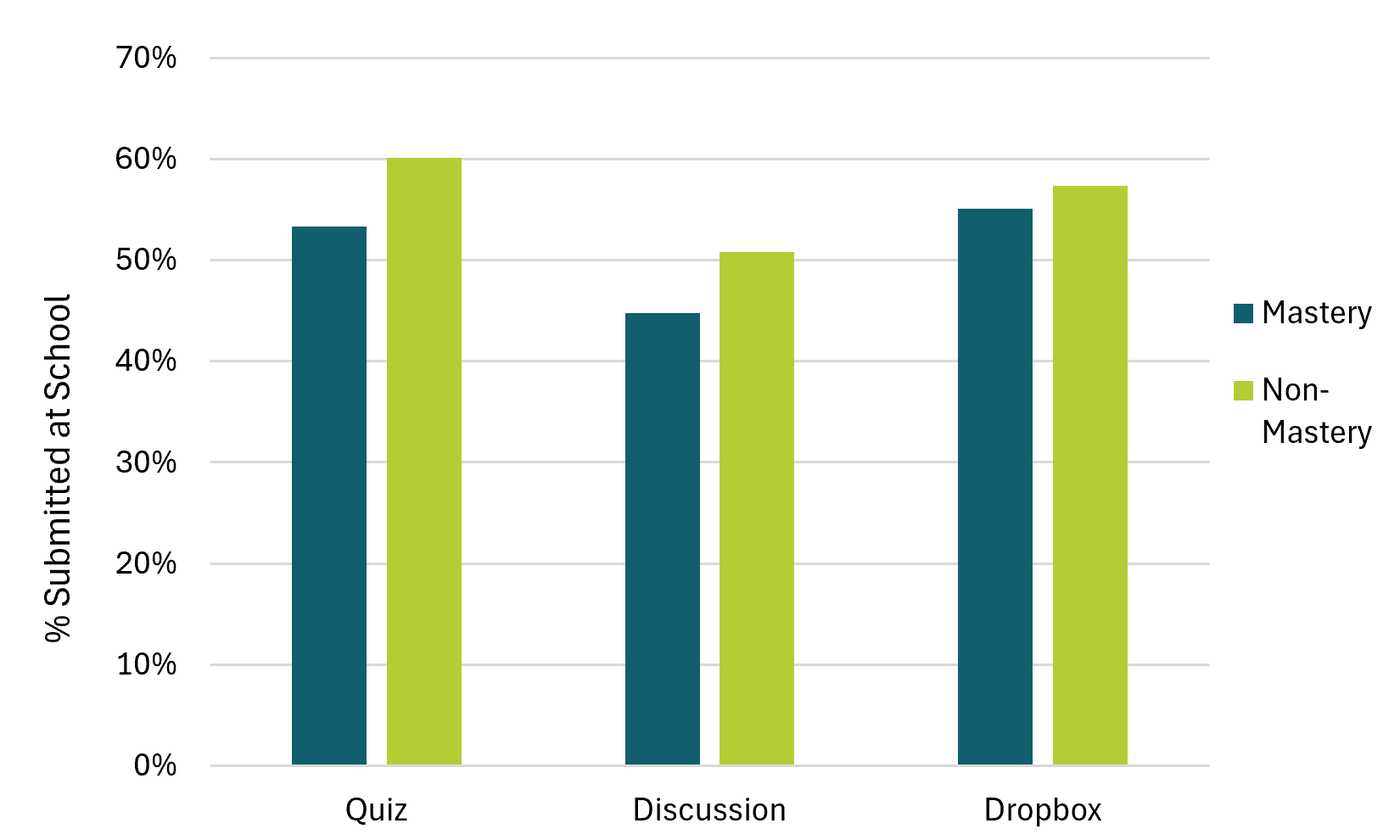
An interesting trend emerged showing that students who failed their courses, and those who did not demonstrate content mastery submitted a higher percentage of assignments during weekday school hours, on average, than their peers. Across performance categories, the largest difference was in the percentage of discussions submitted during weekday school hours; students who failed submitted 7.6% more discussions during weekday school hours than their peers who passed. Rather than indicating that school-based places were less effective, this pattern may reflect greater use of those settings by students who needed additional support. Refer to Figures 2 and 3 for a breakdown of the percentage of assignments submitted during school hours based on students’ course performance.
While it is difficult to discern a specific reason why this trend exists, as discussed in the ‘Any Time, Any Place, Any Pace: How Students Use Time in Online Courses’ report, several possibilities exist. Mentors or instructors may prompt struggling students to complete assignments during weekday school hours when they have face-to-face contact with them, or because students may have increased access to supports and resources while at school. Indeed, research has identified monitoring and motivating student engagement with coursework as key strategies mentors use to help students succeed in their online courses. Similarly, another possibility is that students who are finding the coursework or material difficult may prefer to complete assignments in places where they have access to an adult who can help them understand the content, assignment instructions, or previously received feedback. On the other hand, some mentors have reported granting students increased autonomy and flexibility in response to engagement with their online coursework (Borup & Stimson, 2017). This scaffolded incentive system may be reflected in the current data. Understanding how students use school-based time and place to complete coursework can help instructors and mentors to schedule and craft effective communications and tailor more personalized supports and resources. Similarly, school administrators can use this information to build more resources and supports into the school day and school environment for students enrolled in online coursework.
Figure 2. Location of Assignment Submissions by Pass/Fail Status
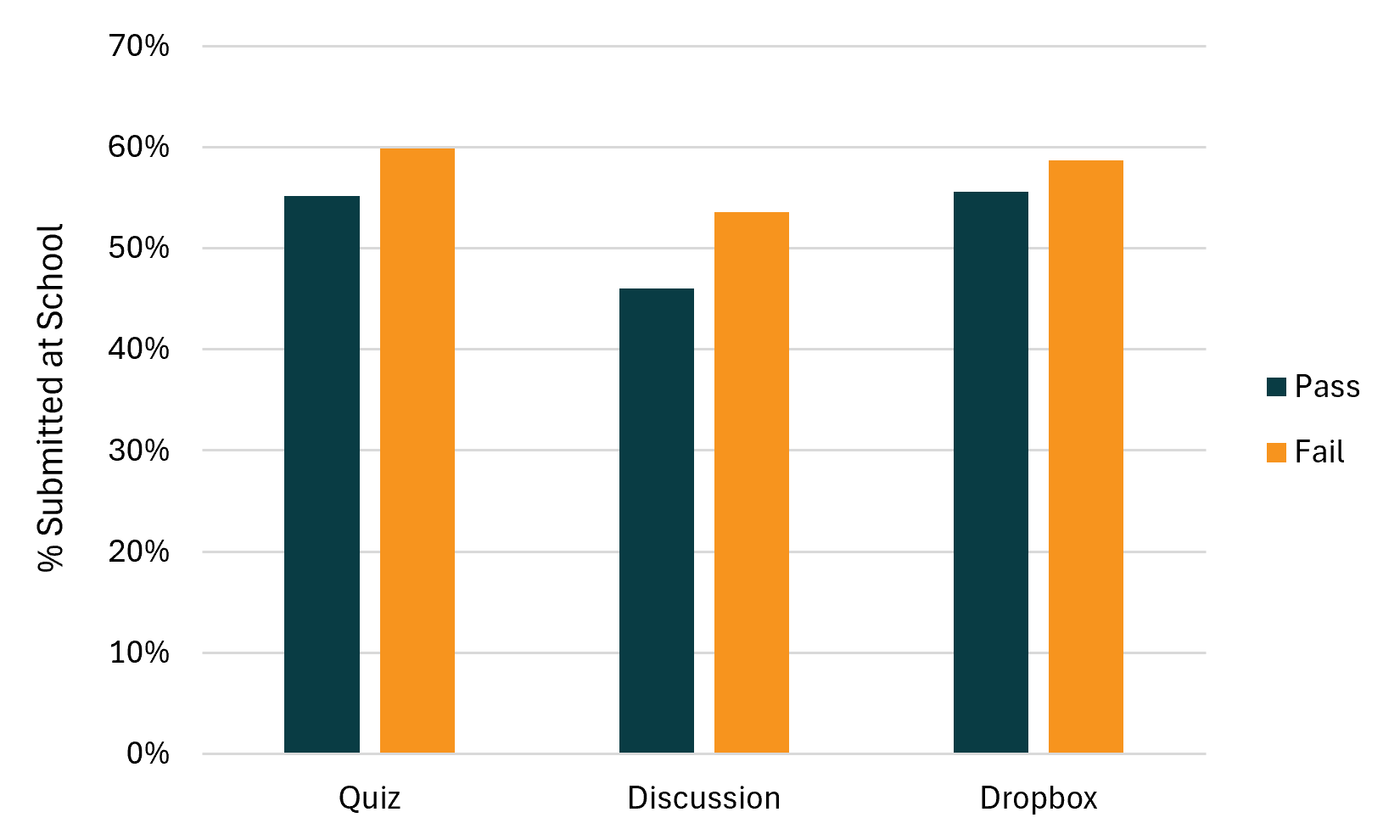 Figure 3. Location of Assignment Submissions by Content Mastery Status
 Patterns in Students' Use of Place
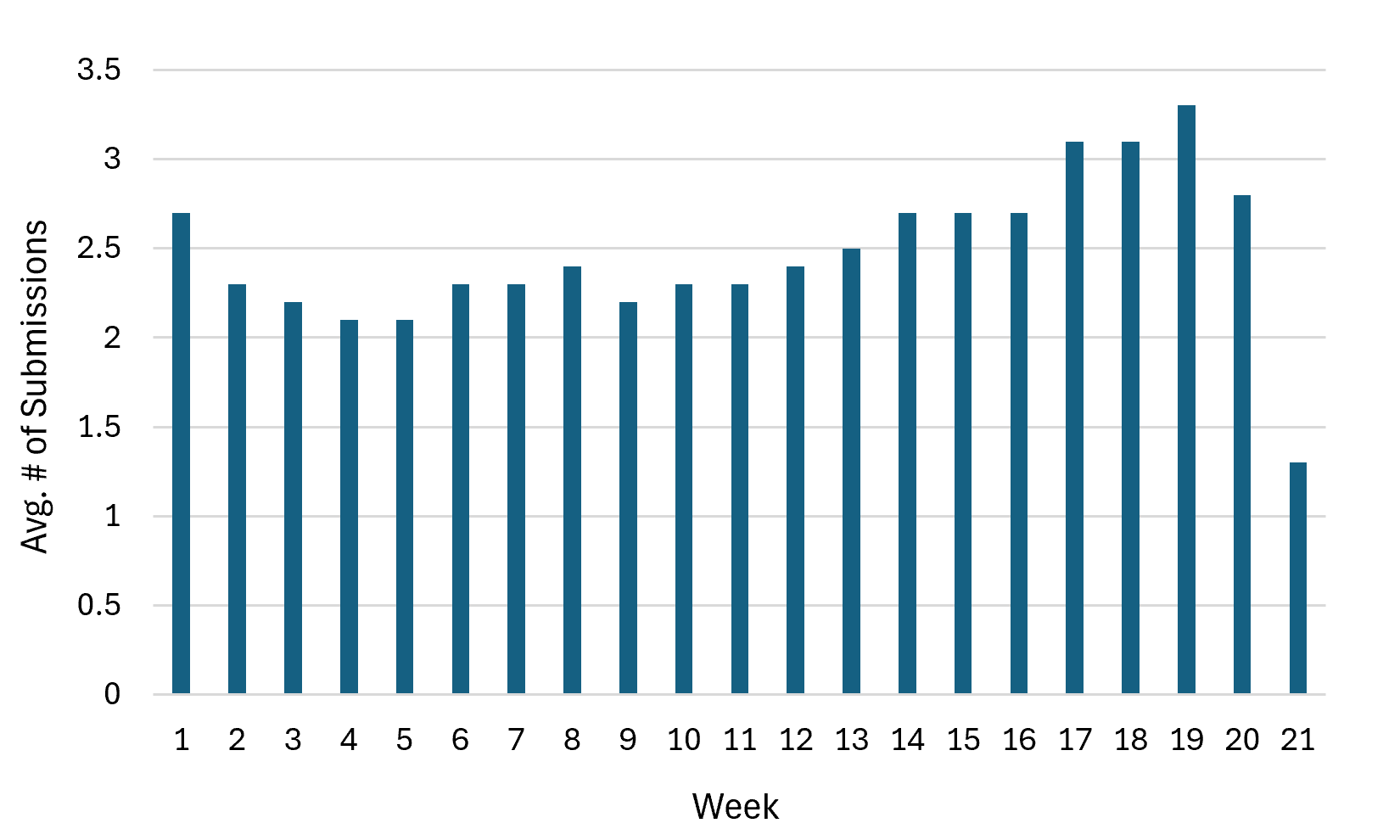
One clear pattern that emerged from the current study is that students still use school-based structures, even when enrolled in online courses. Although submission timestamps do not confirm students’ physical locations, activity during weekday school hours may reflect students’ use of school-based settings, schedules, and supports. Looking specifically at students’ behavior throughout a course, students were more likely to submit assignments during weekday school hours in the first and last weeks of the course. Submissions during school hours were elevated at the beginning of the course, waned slightly in the middle, and then steadily increased. The greatest number of submissions during school hours occurred during week 19, right before the courses’ end (given that Michigan Virtual courses are typically 20 weeks long).
While the reason for this trend is unclear, it’s possible that students need additional support during these parts of the course. At the beginning of a course, students may need support to “learn how to learn” online (Michigan Virtual, n.d.) and adjust to the unique demands of online learning. Towards the end of a course, students may need additional guidance as course materials and assignments likely become more difficult or time-intensive. On the other hand, mentors, instructors, or other school personnel may exert some degree of influence over where students work. Based on students’ engagement, performance, or other factors, school personnel may ask that students work under their supervision.
Figure 4. Average number of assignment submissions per student during weekday school hours based on week in the course
 Conclusions
Despite flexibility being a draw of online learning, students submitted a significant share of assignments during weekday school hours, suggesting that school-based time, settings, and supports remain important within online learning. Looking at week-over-week trends, students were more likely to submit assignments during weekday school hours at the beginning and end of their courses. Thus, consistent with findings from the report ‘Any Time, Any Place, Any Pace: How Students Use Time in Online Courses’ (Cuccolo & DeBruler, 2026), students may need more support at the start and end of their courses. This makes sense as the beginning of an online course can be difficult. Students often need to “learn how to learn” online and develop the specific skills (e.g., time management, self-regulated learning, metacognition) necessary for success (Michigan Virtual, n.d.). Relatedly, it is important to keep in mind that place alone does not tell the whole story. Despite consistent differences in students’ assignment submissions during weekday school hours by course performance, the mechanism underlying these patterns is not yet clear. Student scheduling, course load, academic and non-academic responsibilities, personal preferences or circumstances, and instructor or mentor direction may all affect when and where students complete their coursework.
Although submission timestamps cannot confirm students’ physical locations, these findings reinforce that online learning remains embedded within local school places and support systems. Understanding when students rely on school-connected learning environments can help administrators, mentors, and instructors plan staffing, resources, and communication more effectively.
Appendix A. Demographic breakdown
Entity Type | % |
LEA School | 91.48 |
Nonpublic School | 4.93 |
PSA School | 2.51 |
Data Not Available | 0.50 |
LEA Unique Education Provider | 0.42 |
ISD School | 0.17 |
Locale | % |
Suburb: Large | 29.66 |
Rural: Fringe | 18.13 |
Suburb: Midsize | 12.45 |
Rural: Distant | 6.85 |
City: Small | 5.93 |
Town: Remote | 5.60 |
Town: Fringe | 5.51 |
Data Not Available | 5.43 |
Suburb: Small | 4.93 |
Rural: Remote | 4.09 |
Town: Distant | 1.17 |
City: Midsize | 0.25 |
Diversity | % |
Non-White School Population <=25% | 65.41 |
Non-White School Population >25% and <=50% | 20.80 |
Non-White School Population >50% and <=75% | 6.68 |
Data Not Available | 5.76 |
Non-White School Population >75% | 1.34 |
Economic Status | % |
Mid-Low Poverty (>25% to <=50%) | 40.43 |
Low Poverty (<=25%) | 36.51 |
Mid-High Poverty (>50% to <=75%) | 14.12 |
Data Not Available | 6.35 |
High Poverty (>75%) | 2.59 |
References
Borup, Jered; West, Richard E.; Graham, Charles R.; and Davies, Randall S., "The Adolescent Community of Engagement: A Framework for Research on Adolescent Online Learning" (2014). Faculty Publications. 8179. https://scholarsarchive.byu.edu/facpub/8179
Borup, J., & Stimson, R. (2017). Helping students be successful: Mentor responsibilities. Michigan Virtual University. https://pub-234ad9afd00f4f67ae8e0782b0ea7801.r2.dev/uploads/2017/01/helping-students-be-successful-mentor-responsibilities.pdf
Borup, J., & Stimson, R. J. (2019). Responsibilities of online teachers and on-site facilitators in online high school courses. American Journal of Distance Education, 33(1), 29-45. https://doi.org/10.1080/08923647.2019.1554984
Byers, T. (2015). The empirical evaluation of the transition from traditional to New Generation Learning Spaces on teaching and learning. Imms, W (Ed.) Cleveland, B (Ed.) Mitcheltree, H (Ed.) Fisher, K (Ed.) Second Annual International Learning Environments Research Higher Degree Symposium, The University of Melbourne.
Byers, T., Imms, W., & Hartnell-Young, E. (2014) Making the case for space: The effect of spaces on teaching and learning. Curriculum and Teaching. https://www.researchgate.net/publication/264428871_Making_the_Case_for_Space_The_Effect_of_Learning_Spaces_on_Teaching_and_Learning
California Virtual Academies. (2025, December 24). Curious how online learning works? https://cava.k12.com/enrollment/how-it-works/
Connections Academy. (2020, August 18). Differences Between Real Time and Anytime Learning.https://www.connectionsacademy.com/support/resources/article/differences-between-real-time-and-anytime-learning/
Cuccolo, K. (2023, September 28). Mapping the mentorship landscape: Insights on mentoring in different school settings. Michigan Virtual. https://michiganvirtual.org/blog/mapping-the-mentorship-landscape-insights-on-mentoring-in-different-school-settings
Cuccolo, K., & DeBruler, K. (2026). Any Time, Any Place, Any Pace: How Students Use Time in Online Courses. Michigan Virtual.
Cuccolo, K. & DeBruler, K. (2023). Examining Mentors’ Navigation of Online Environments and Use of Student Support Practices. Michigan Virtual. https://michiganvirtual.org/research/publications/examining-mentors-navigation-of-online-environments-and-use-of-student-support-practices
DeBruler, K. & Green, C. (2020). MVLRI research in review: K-12 on-site mentoring. Michigan Virtual.
Dominguez, S., & Svihla, V. (2023). A review of teacher implemented scaffolding in K-12. Social Sciences & Humanities Open, 8(1), 100613.
Du, X., Yang, J., Shelton, B., & Hung, J. L. (2019). Is learning anytime, anywhere a good strategy for success? Identifying successful spatial-temporal patterns of on-the-job and full-time students. Information Discovery and Delivery, 47(4), 173-181. https://doi.org/10.1108/IDD-09-2019-0060
Freidhoff, J. R., DeBruler, K., Cuccolo, K., & Green, C. (2026). Michigan’s k-12 virtual learning effectiveness report 2024-25. Michigan Virtual.
ION Professional eLearning Program. (n.d.). Strengths and weaknesses of online learning. University of Illinois Springfield. https://www.uis.edu/ion/resources/tutorials/overview/strengths-weaknesses
Kariippanon, K. E., Cliff, D. P., Ellis, Y. G., Ucci, M., Okely, A. D., & Parrish, A. M. (2021). School flexible learning spaces, student movement behavior and educational outcomes among adolescents: A mixed‐methods systematic review. Journal of School Health, 91(2), 133-145. https://doi.org/10.1111/josh.12984
Michigan Virtual. (n.d.). Mentor guide to online learning. Retrieved July 24, 2026, from https://michiganvirtual.org/resources/guides/mentor-guide
Michigan Virtual. (2025). 2024–25 Annual Report. https://pub-4ca1463cfd8d49b6b4f0a4909920741d.r2.dev/legacy-wordpress/uploads/2025/12/2024-25-Annual-Report-FinalWeb.pdf
Ng C. F. (2021). The Physical Learning Environment of Online Distance Learners in Higher Education - A Conceptual Model. Frontiers in psychology, 12, 635117. https://doi.org/10.3389/fpsyg.2021.635117
Oliveras-Ortiz, Y., Bouillion, D. E., & Asbury, L. (2021). Learning spaces matter: Student engagement in new learning environments. Journal of Education, 201(3), 174-182. https://eric.ed.gov/?id=EJ1317124
Ricker, G., Belenky, D., & Koziarski, M. (2021). Are parents logged in? The importance of parent involvement in K-12 online learning. Journal of Online Learning Research, 7(2), 185-201.
Scott-Webber, L., Konyndyk, R., French, R., Lembke, J., & Kinney, T. (2017). Spatial Design Makes a Difference in Student Academic Engagement Levels: A Pilot Study for Grades 9-12. European Scientific Journal, ESJ, 13(16), 5. https://doi.org/10.19044/esj.2017.v13n16p5
Seddon, M. (2019). Context-Dependent Memory: Do Changes in Environmental Context Cues Affect Student Recall?. Teacher Education Advancement Network Journal, 11(3), 25-34. https://files.eric.ed.gov/fulltext/EJ1266305.pdf
Spring, K. J., Graham, C. R., Hanny, C. N., Tuiloma, S., & Badar, K. (2024). Academic Communities of Engagement: exploring the impact of online and in‑person support communities on the academic engagement of online learners. https://doi.org/10.1007/s12528-023-09373-2
Sheets, V.L., Bailey, W.M. Digital learning takes place: learning spaces of online students. Learning Environ Res 28, 593–611 (2025). https://doi.org/10.1007/s10984-025-09538-z